
How Residual Ash Content in High-Purity Graphite Impacts Thermal Field Uniformity
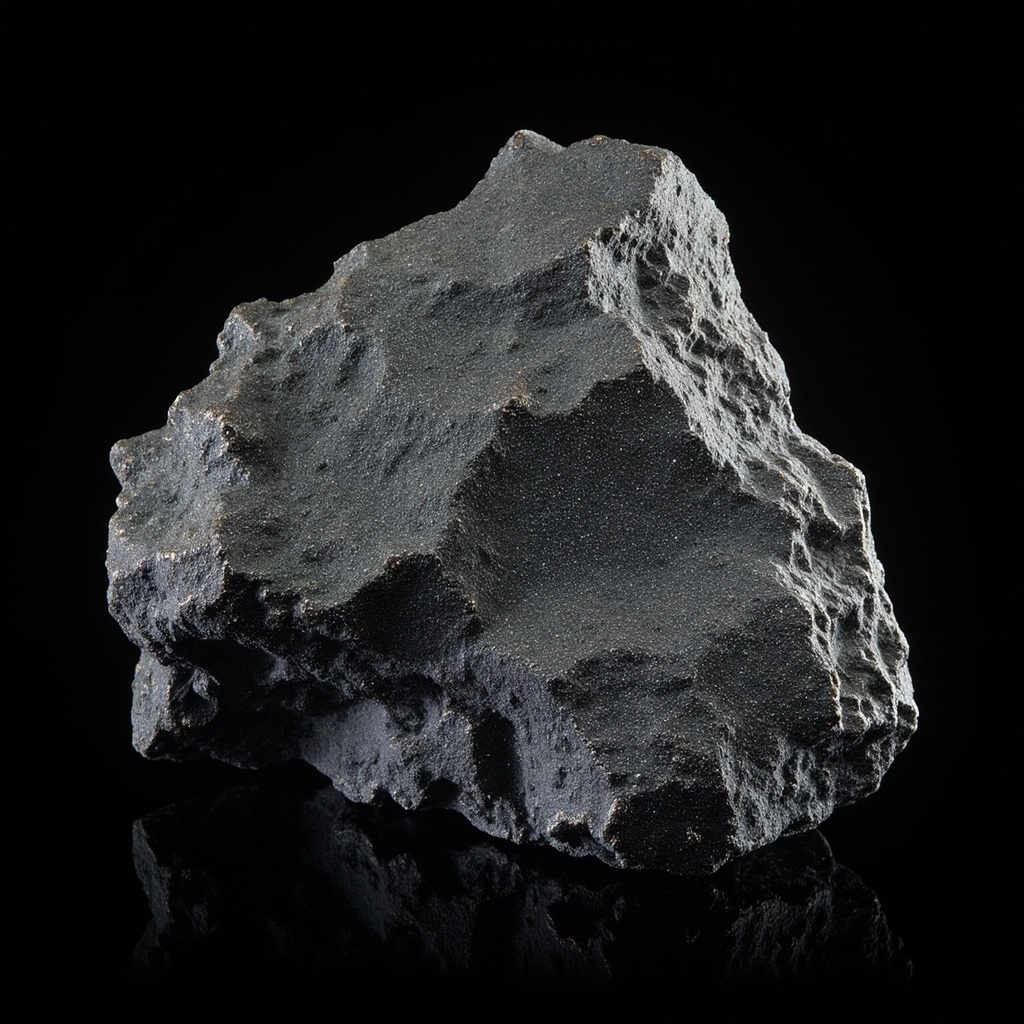 You can have the most sophisticated furnace design on the planet, but if your graphite components are hiding a dirty little secret, your thermal field will be a mess. That secret is residual ash. It is the silent killer of uniformity, and most engineers only discover it after a batch of expensive material comes out warped, cracked, or inconsistent. Let’s cut the fluff and get straight to the physics: ash content is not just a purity number on a spec sheet. It is a direct throttle on how evenly your heat distributes.
When we talk about High-Purity Graphite, we are talking about carbon atoms arranged in a crystalline lattice that conducts heat like a dream. But throw in trace minerals—silicon, aluminum, iron, calcium—and you have introduced thermal roadblocks. These impurities have different thermal expansion coefficients and vastly different thermal conductivities compared to the surrounding graphite matrix. As your furnace ramps up to operating temperature, these foreign particles expand at a different rate. They create micro-stresses, localized hot spots, and, worst of all, they act as thermal insulators or conductors in random pockets. The result? A thermal field that looks less like a smooth gradient and more like a topographical map of the Himalayas.
Think about the real-world pain here. You are running a silicon carbide growth process or a high-temperature sintering cycle. You need the center of your crucible to be within a few degrees of the edge. If your graphite susceptor or heater element has an ash content of 100 parts per million versus 5 parts per million, you are not just dealing with a minor variance. You are dealing with a drift that can ruin crystal uniformity or create a hot zone that accelerates wear. The higher the ash, the more unpredictable the thermal conductivity becomes over the life of the part. As the graphite oxidizes or reacts over repeated cycles, those ash particles can form volatile compounds that further degrade the material, creating a moving target for your temperature control system.
Here is where the advantage of ultra-low ash graphite becomes a competitive weapon. Our material is engineered to a residual ash content of less than 10 parts per million, and in some grades, we push it below 2 parts per million. That is not just a number we print on a certificate. That is a guarantee that your thermal field will remain stable from the first cycle to the thousandth. When you eliminate those rogue particles, you eliminate the micro-variations that force your PID controllers to constantly hunt and overshoot. The graphite behaves as a homogeneous thermal mass. It heats evenly, it cools evenly, and it transfers energy with a predictability that lets you tighten your process windows.
Consider the cost of inconsistency. A single batch of high-value material ruined because a hot spot developed near an ash inclusion can wipe out the profit margin of an entire run. Our clients who switched from standard purified graphite to our ultra-low ash variant report a direct reduction in scrap rates and a measurable improvement in the repeatability of their thermal profiles. They do not have to over-engineer their temperature margins to compensate for unknown variables. They can run closer to the edge of the process envelope because they trust the material.
This is not about selling a premium product for the sake of it. It is about understanding that in high-temperature processing, the enemy is entropy. Ash content is entropy in solid form. It introduces chaos into your thermal field. By removing it, you are not just buying cleaner graphite. You are buying control. You are buying the ability to tell your furnace exactly what to do and having it obey without argument. If you are serious about thermal field uniformity, stop looking at your heating elements and start looking at the invisible impurities that are sabotaging your heat from the inside out. The solution is simpler than you think: lower the ash, raise the uniformity.
