
Child Care at Vale Village: Enrolment, Routines, and What Daily Life Actually Looks Like
If a childcare centre can’t explain its routines and safety practices in plain language, I don’t trust it. Full stop.
Vale Village does explain them. The enrolment path is clean, the daily rhythm is predictable (in a good way), and the “what happens if…” questions like allergies, late pickups, or a rough first week aren’t treated like annoying edge cases. They’re baked into the system.
One-line truth: good childcare is mostly good logistics.
Enrolment at Vale Village (the real version, not the brochure version)
You start with an inquiry, usually a short chat or message. Then a tour. Then registration.
That sequence matters because the tour isn’t just “look at the cute room.” It’s where you check the boring-but-critical stuff: supervision patterns, how handovers work, where staff stand outside, how incident reporting is handled, and whether the vibe is calm or chaotic.
Enrolment itself is straightforward: you complete forms, confirm your start date, and review policies. child care at Vale Village also assigns your child to a class and introduces you to a primary caregiver, which, based on what I’ve seen over the years, cuts down separation anxiety and parent uncertainty more than any fancy app ever will.
What you’ll need: documents + timing (don’t wing this)
Now, this won’t apply to everyone, but if families struggle in week one it’s often because paperwork drags on and staff are forced to “guess” routines. That guesswork is where mistakes happen.
Expect to submit:
– Enrolment form and emergency contacts
– Proof of guardianship (so pickups are legally clean and unambiguous)
– Immunisation/medical records
– Allergy details + action plans if relevant
– Authorized pickup list
– Any care notes: sleep preferences, comfort items, triggers, calming strategies (yes, these count as “documentation” in practice)
Look, send this early and confirm they received it. The fastest onboarding is the one with zero back-and-forth.
How Vale Village tailors care (and why assessment isn’t a scary word)
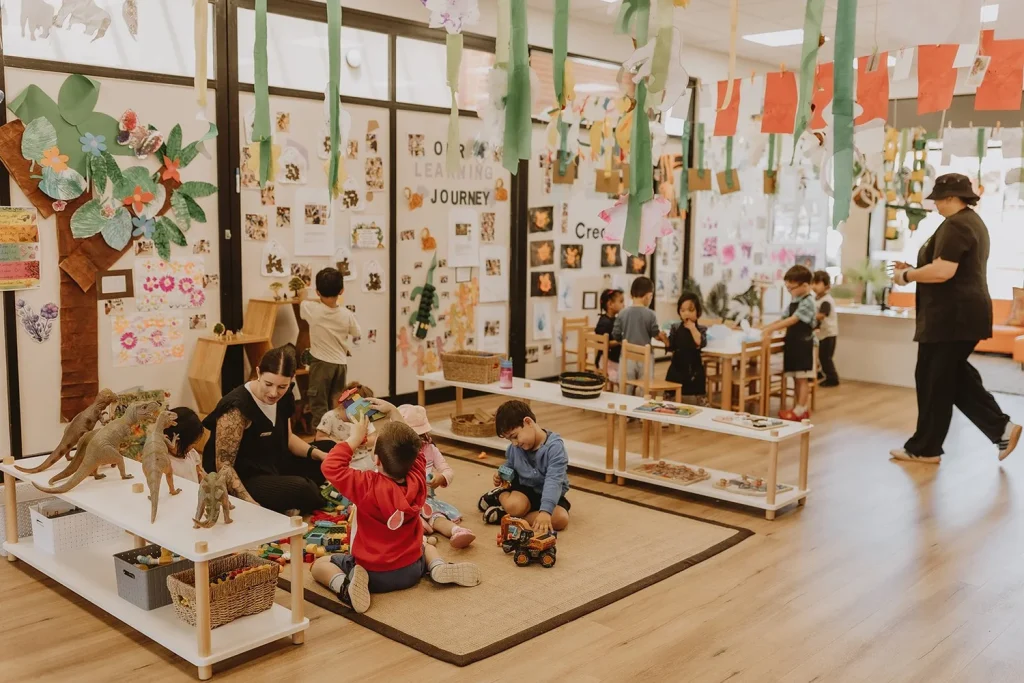
Care is “personalised” at a lot of centres in the same way gym memberships are “personalised”: technically true, functionally vague.
Here it’s more concrete. Staff gather parent input, observe your child in the room, and map routines around real behaviour: sleep cues, feeding patterns, transitions, social comfort, sensory sensitivities, the whole thing. It’s not just developmental milestones on paper; it’s “what helps this child stay regulated at 10:30 a.m. when the room gets loud?”
In my experience, the centres that document little observations consistently are the ones that adapt fastest when something changes at home (new sibling, travel, sleep regression… you know the list).
First week: what to expect (and what you should ask)
You’ll get a welcome packet with routines, drop-off procedures, and key contacts. The first days focus on predictable check-ins and a calm handoff. That’s not fluff. Predictability is stress reduction for children and adults.
You’ll typically cover:
– Comfort items: what’s allowed, what needs labeling, what stays at home
– Allergy reminders and meal boundaries
– How updates work during the day
– What the caregiver will do if your child won’t settle (because sometimes they won’t)
Some days will feel smooth. One day might feel messy. That’s normal.
A typical day: from arrival to pickup (smooth handovers are the secret sauce)
Arrival isn’t a mad dash. It’s a short, deliberate check-in.
Caregivers confirm anything that matters for that day: allergies, routine changes, and the presence of comfort items. Then the handoff is calm and quick. Long goodbyes tend to backfire; they turn uncertainty into theatre.
During the day, the rhythm is structured: learning blocks, play, meals, outdoor time, quiet time, transitions handled by trained staff who know where they need to be standing (especially outside). Pick-up mirrors drop-off: brief debrief, any notes, and a predictable goodbye.
One-line emphasis: consistency beats intensity.
Food and nutrition: not glamorous, genuinely important
Vale Village frames nutrition around balanced meals and steady energy: fruits and vegetables, whole grains, lean proteins, dairy or alternatives, plus snacks that don’t spike and crash a child’s mood.
Nutritious meal planning (what “balanced” looks like on the ground)
Meals are timed to match the day’s activity demands. Portions are scaled to age and appetite. That last bit matters because forcing “clean plates” creates power struggles and teaches children to ignore hunger cues.
Allergy controls are operational, not theoretical: labeling, cross-contact prevention, and clear lists that staff actually use.
Snack time (small thing, big impact)
Snacks land between learning blocks and play so kids don’t hit the wall. Staff guide portions and encourage self-selection when appropriate, which is a quiet way of teaching autonomy.
Dietary accommodations policy (the inclusion test)
Families document needs; staff update menus and prepare food with allergen-aware workflows. It’s also about culture and preference, not just anaphylaxis. If a centre can’t handle that complexity, they’re not ready for real life.
A concrete stat for context: In the U.S., food allergies affect about 1 in 13 children (roughly two per classroom), according to FARE (Food Allergy Research & Education). That’s why “we’ll be careful” isn’t a policy. It needs systems.
Source: https://www.foodallergy.org/resources/facts-and-statistics
Quiet time + rest: the part families underestimate
Some parents obsess over curriculum and ignore rest logistics. I’d flip that.
Quiet Time Scheduling
Quiet time follows active periods. Lights dim, the room softens, routines repeat daily. Kids learn what’s coming, which lowers resistance. Some children sleep; others rest quietly with books or soothing activities, depending on age and policy.
Rest Period Guidelines (more technical, less poetic)
You’ll see:
– Designated rest spaces
– Structured intervals by age group
– Staff monitoring and brief documentation of rest status
– Adjustments recorded and communicated to families
Sleep Space Expectations
Order matters here: consistent layout, clear boundaries, minimal noise, approved comfort items only, and unobtrusive checks (constant hovering can keep children awake).
Play and learning (yes, it’s “just play” and that’s the point)
Play at Vale Village isn’t random. Materials rotate. Prompts encourage language, fine motor skills, problem-solving, cooperation. Even clean-up is part of the learning design because routines teach executive function in a way worksheets never will.
Outdoor time includes safe risk: climbing, testing limits, figuring out what their body can do today. Staff supervise actively and manage transitions between spaces, which is where many centres get sloppy.
Allergies, medical needs, and culture: handled as daily practice, not special events
Procedures guide allergy management: documented triggers, action plans, trained responses. Medical needs are handled with prescribed medication processes and steady communication, not panic.
Cultural inclusion shows up in ordinary decisions: activities, celebrations, language choices, and how staff talk about family structures and food. It’s subtle, but kids notice.
If something feels off, Vale Village points families to a straightforward escalation path and collaborative adjustments. That’s how you keep trust intact.
Communication: updates that don’t bury you in noise
Here’s the thing: parents don’t need 40 messages. They need the right messages.
Vale Village uses a consistent system: email, parent portal updates, and printed notices at the entrance. SMS alerts are available for urgent items. When something changes, schedule, policy, safety procedure, you get the what, the why, and what you need to do (if anything). Staff training supports consistency so policy updates don’t turn into “depends who you ask.”
Partnerships & collaboration (the underrated layer)
The centre doesn’t operate in a bubble. Families are treated like partners, and community connections support planning and resources. That’s not just feel-good language; it reduces friction when a child needs extra support or routines shift at home.
If you want the short read on Vale Village: it’s a system built around predictable routines, documented safety practices, and communication that respects parents’ time. That combination tends to produce calmer kids, and calmer adults, which is the whole game.
